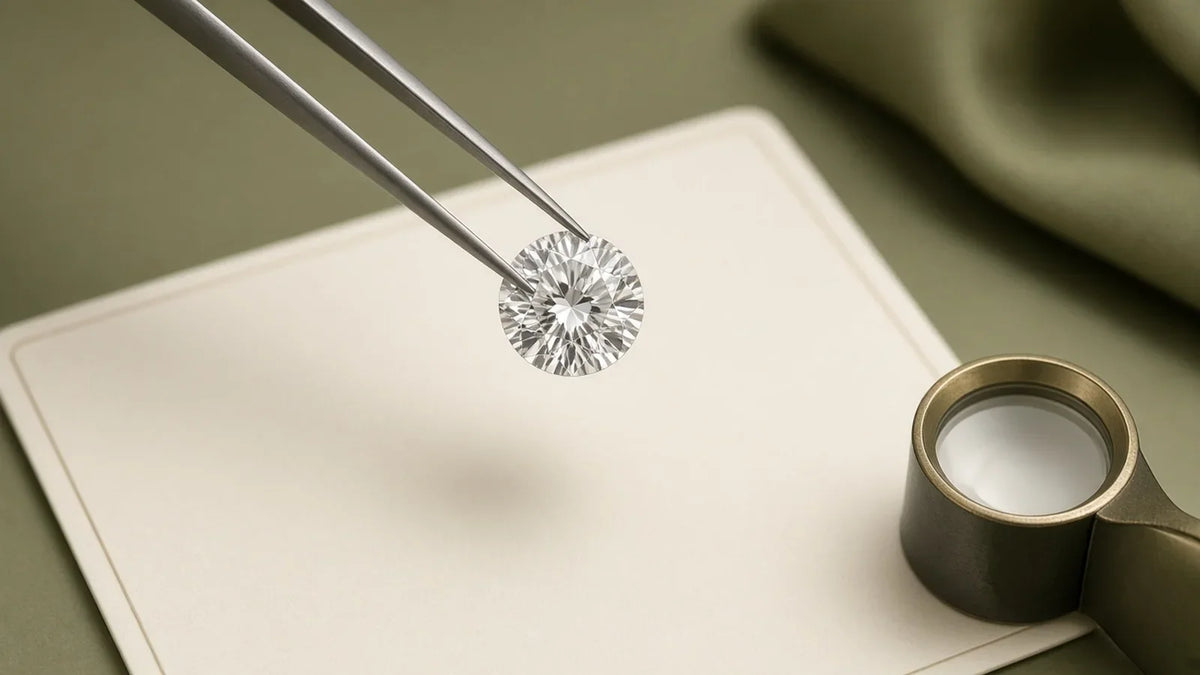
Read a lab-grown diamond report by matching three things: the issuing laboratory's record, the individual stone being proposed and the written ring proposal. Verify the report number through the laboratory, then resolve any mismatch before approval. A screenshot or successful online lookup alone does not identify the physical stone in front of you.
Start with the issuing laboratory and report number
Use IGI's official verification page for an IGI report, or GIA Report Check for a GIA record. Enter the number yourself and compare the returned information with the document supplied. If no result appears, check transcription and contact the issuer or supplier to resolve it; do not treat a lookup failure as proof of fraud or as something to ignore.
- Match the report number and laboratory-grown identification.
- Compare shape, carat weight and measurements with the proposed stone record.
- Read any comments and inscription information shown on that particular document.
- Ask how the physical stone will be matched to the record, including checking a listed inscription where applicable.
An inscription may require magnification and help from a qualified professional to read. Its presence or absence should be considered against the actual report, rather than assumed from a generic image.
Do not assume every laboratory uses the same labels
IGI's loose-diamond report overview describes origin identification and grading information. Read the fields actually present rather than filling in missing details from another report's layout.
GIA changed its service for D-to-Z laboratory-grown diamonds from October 1, 2025. Its newer overall quality assessment uses Premium and Standard; see GIA's service announcement. Older documents and other laboratories may use different formats. A newer GIA category is not a direct substitute for each separate grade on an IGI document.
Connect the numbers to the ring decision
Carat is weight; measurements describe physical dimensions. Length, width and depth help explain the stone being considered and provide inputs for setting review. Do not substitute a generic carat-to-size chart for that stone's recorded dimensions. Our carat and millimetres guide shows how to compare them.
Ask for current images or video identified as that individual stone. Use them to discuss appearance alongside the report. Grades, diagrams and enlarged images answer different questions; none alone tells you how the complete ring will look on your hand.
- Laboratory record: describes the examined stone.
- Stone evidence: identifies the diamond currently proposed.
- Ring proposal: names that stone within the complete design.
Know what a report does not settle
IGI's verification page states that its report is an opinion, not a guarantee, appraisal or warranty. A report also does not establish current stock, reservation, the finished ring's construction, or a promised resale value. Those questions need their own evidence or terms.
Illustrative mismatch: the proposal names one stone reference, but the supplied report shows different measurements. Ask for a corrected, consistent set of records before approving. Do not choose whichever number appears more attractive.
Ask one precise verification question
Browse IGI-graded stones in the lab-grown diamond library, see how STELLIVON matches each center stone to its IGI report, and include report preferences in your brief. If you already have a proposal, ask: “Which report and images identify this selected stone, and how will its identity be checked?” No individual report has been authenticated by this article.
By STELLIVON. Source checked October 3, 2026. Laboratory references explain general principles; they do not certify STELLIVON or an individual ring.