Education
Lab-Grown Diamond Education: The 4Cs
What is a lab-grown diamond?
A lab-grown diamond is real diamond: the same carbon crystal, hardness and sparkle as a mined stone. The difference is origin. Ours are grown in controlled conditions (CVD or HPHT) over weeks rather than formed underground over millions of years.
The 4Cs, in plain terms
Cut
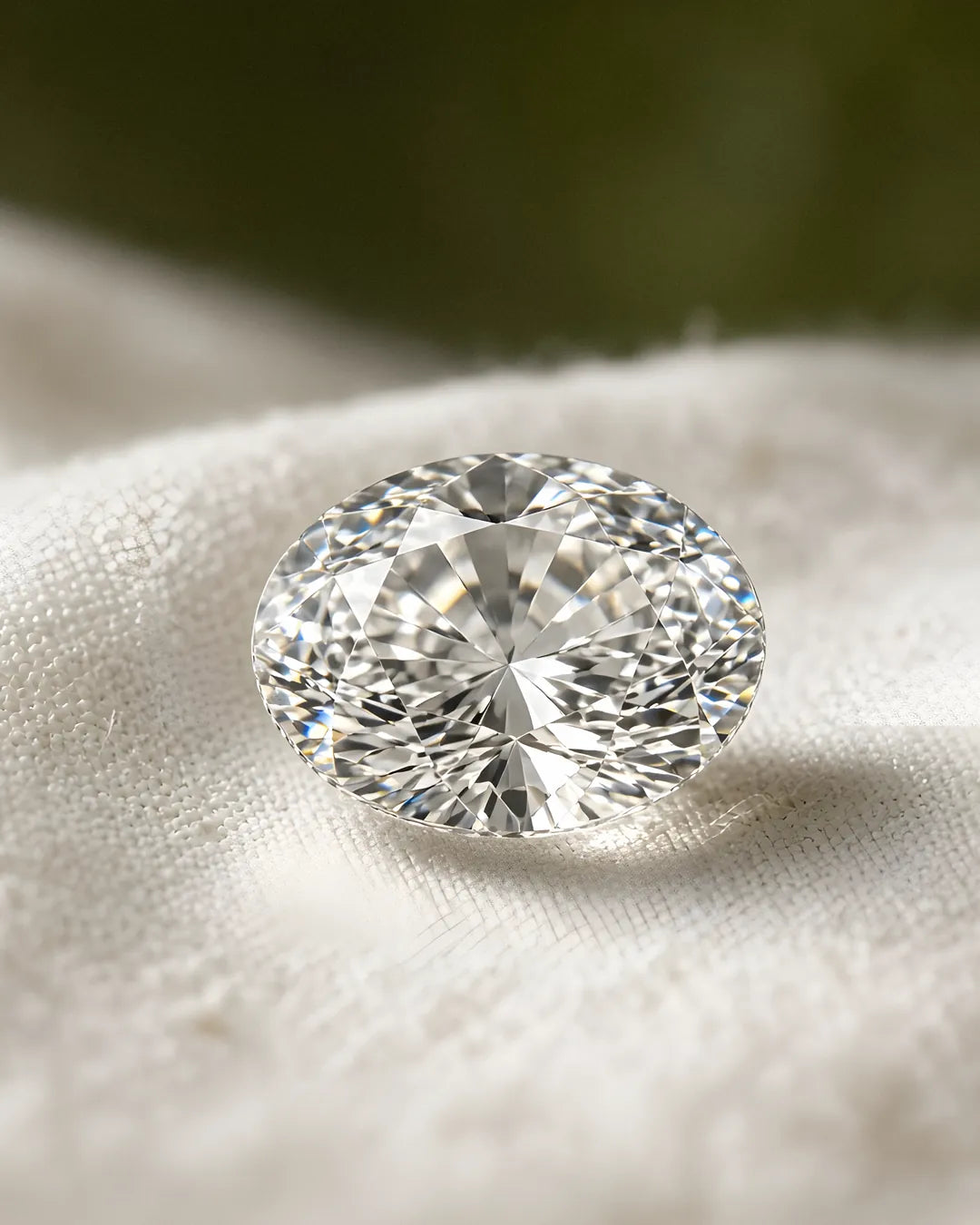
Cut is the craftsmanship of the facets and has the biggest effect on brilliance. For round stones we recommend Excellent or Ideal cut grades. For fancy shapes such as oval, look at symmetry, polish and a pleasing length-to-width ratio (about 1.30–1.50 for most ovals).
Color
Graded D (colorless) to Z. Most of our stones are F–G: they face up bright white, especially in white gold or platinum, at a friendlier price than D.
Clarity
Measures tiny internal features. VS1–VS2 stones look clean to the naked eye; paying for VVS or IF rarely changes what you see.
Carat
Carat is weight, not size. Two stones of the same weight can look different depending on cut and shape; ovals often look larger face-up than rounds of the same weight.
Our recommendation
Put cut first, choose F–G color and VS clarity, then pick the size that fits your budget. Every center stone we offer comes with an independent grading report.
Questions? Email hello@stellivon.com.
Related guides
- Are lab-grown diamonds real diamonds? What makes a lab-grown stone a true diamond, and how grading reports confirm it.
- Lab-grown vs natural diamond: how the two compare on origin, appearance, grading and value.

Round brilliant
Why the round brilliant still leads
A round brilliant has 57 or 58 facets arranged to return as much light as possible, which is why it shows the strongest sparkle of any shape. On a lab-grown diamond, IGI grades the cut of a round from Excellent to Poor; it is the only shape with a full cut grade.
In a four-prong solitaire, the claws hold the stone at the corners of a square so most of the diamond's face stays visible. When you compare round stones, check the cut grade first, then colour and clarity, and use the measurements in millimetres to judge face-up size.

Education
Shapes, seen up close
Oval
Emerald
Cushion

Radiant