What a setting does
The setting is the metal that holds the diamond and the design that frames it. It decides how the stone is protected, how much light reaches it, how high it sits on the finger and, above all, the ring's character. The same diamond can look minimal, romantic or dramatic depending on its setting.
Here are the settings we design most often, and how to choose between them.

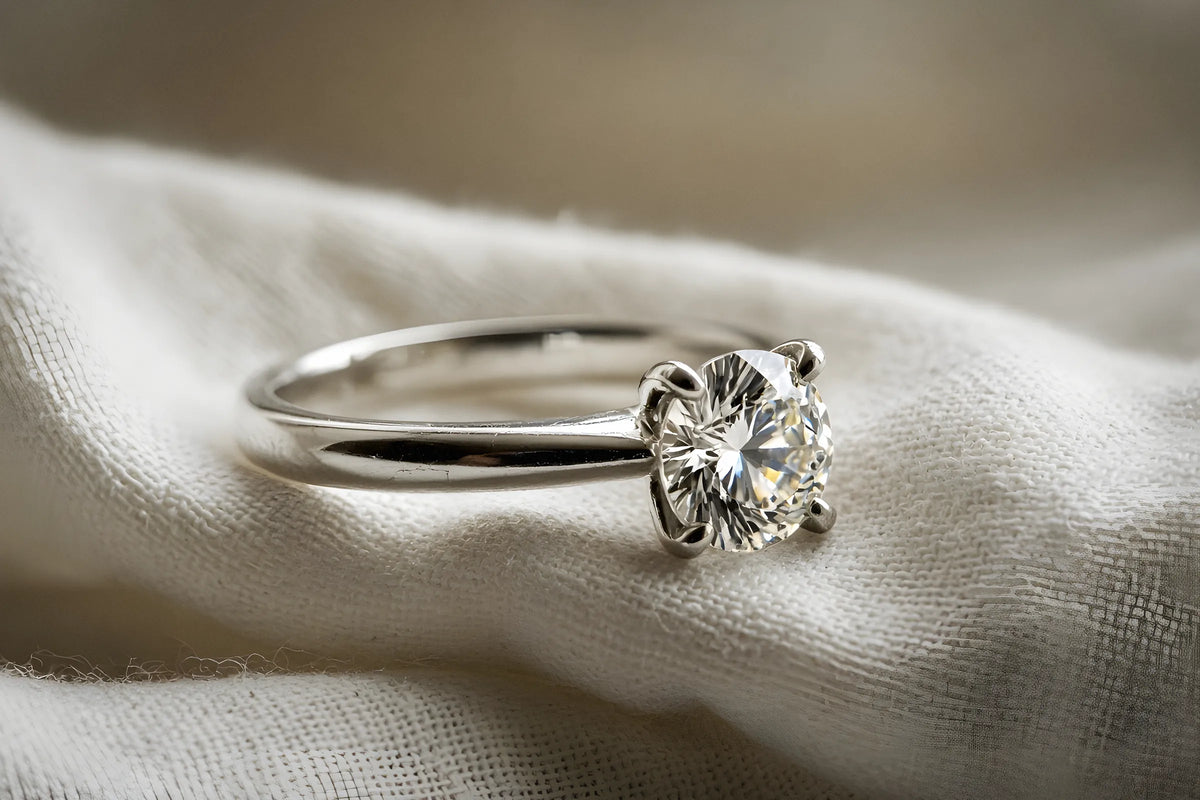
Solitaire
What it is: a single centre stone on a plain band, usually held by four or six claws.
Why people choose it: it is timeless and puts all the attention on the diamond. It pairs easily with almost any wedding band.
Consider: with no accents, the cut quality of the centre stone matters even more.
Suits: people who love simplicity, and anyone who wants to stack bands later.
Halo
What it is: a frame of small diamonds encircling the centre stone.
Why people choose it: it adds sparkle and makes the centre stone face up larger. It can make a slightly warmer stone look whiter by surrounding it with bright accents.
Consider: small accent stones need occasional checks. The halo also widens the head, which affects how a wedding band sits beside it.
Suits: people who love brilliance and presence.
Hidden halo
What it is: a row of small diamonds set beneath the centre stone, visible mainly from the side.
Why people choose it: it gives a clean solitaire look from above with a private sparkle in profile. Many clients describe it as their "secret detail".
Consider: it adds a little height to the head.
Suits: people who want simplicity with a twist.
Pavé
What it is: small diamonds set closely along the band (pavé is French for "paved").
Why people choose it: it creates continuous light around the finger and pairs well with solitaire, halo and hidden halo heads.
Consider: full pavé bands are harder to resize, and they need occasional checks of the small stones. A half-pavé band, with stones across the top only, keeps the underside plain and easier to resize.
Suits: people who want extra sparkle without a halo.
Three stone
What it is: a centre stone flanked by two side stones, which may be the same shape or a contrasting one (for example, an emerald cut with tapered baguettes).
Why people choose it: it creates a wider, balanced line across the finger and is often given meaning as past, present and future.
Consider: the proportions must be right, so the side stones support the centre rather than compete with it.
Suits: people who want presence and symbolism.
Bezel
What it is: a thin rim of metal surrounding the stone instead of claws. A partial bezel covers only two sides.
Why people choose it: it offers maximum protection and a smooth profile that does not catch. It looks modern and minimal.
Consider: the metal covers a little of the stone's outline, so it faces up slightly smaller, and less light enters from the sides.
Suits: active hands, healthcare workers and anyone who prefers a sleek look. Compare the two approaches in our bezel vs prong guide.
Claws (prongs): four or six?
- Four claws show more of the diamond and give a slightly square outline to rounds.
- Six claws add security and a softer, rounder outline.
- Double claws add security and a decorative look.
- Claw shapes, whether round, claw-tip, V or flat, change the character subtly.
Setting height
A low setting sits close to the finger. It is practical for daily life and catches less on clothing. A higher setting lets in more light from the side and makes a stronger statement. The right height depends on how the wearer lives. We discuss this at the brief and confirm it exactly at the CAD stage.
Matching a wedding band
Some settings, such as a halo or a low-set head, leave a gap beside a straight band. If a flush fit matters to you, design the engagement ring and the wedding band together, or plan a contoured band.
How to choose
- Start with lifestyle. Active hands lean towards lower settings or bezels.
- Decide the role of the centre stone. Is it the only star, or one part of a composition?
- Choose one signature detail. A hidden halo, a pavé band or a distinctive claw is usually enough.
- Look at the outlines drawn. Browse the Setting Gallery.

How we design settings
Every STELLIVON setting is drawn for its stone. You approve a hand-drawn line sketch of the setting, then a CAD model built to the exact measurements of your diamond, before production. A 75% deposit begins the work, and the balance is due after CAD approval. The deposit is refundable if you cancel before production. We do not accept returns after production, because every ring is one of a kind. One size change is free (you cover shipping). A change of up to 2 Hong Kong sizes is possible but requires a new band, charged separately; your centre diamond is reused. Full details are in our Custom Order Terms.
Settings and the shape of the stone
Some settings suit some shapes especially well:
- Round: works with every setting. Six claws soften the outline, and a halo adds presence.
- Oval: a hidden halo and a slim pavé band are popular. Claws at the ends protect its narrow points.
- Emerald cut: a four-claw solitaire or a three-stone design with tapered side stones shows off its architecture. A bezel suits a minimal look.
Maintenance by setting
- Solitaire: check the claws occasionally.
- Halo and pavé: have a jeweller inspect the small stones periodically. Clean them gently with a soft brush.
- Bezel: low maintenance. Small dents in the rim can be smoothed by a jeweller.
- Three stone: check the claws on all three stones.
Whatever the setting, take the ring off for heavy work and the gym, and store it separately so harder stones do not scratch other jewellery.
Settings and metal
The metal colour of the setting changes how the stone looks. White gold claws disappear against a white diamond. Yellow and rose gold claws frame it with warm contrast. Some clients choose a white gold head on a yellow or rose gold band, so the stone looks as white as possible while the band stays warm.
A quick checklist
- Lifestyle and setting height agreed
- Centre-stone role decided
- One signature detail chosen
- Claw count chosen
- Wedding band fit considered
- Maintenance expectations understood
Settings and comfort
Comfort is easy to overlook in photos. Consider:
- The gallery, the side profile under the stone. An open gallery lets light in. A closed or decorated gallery adds detail and strength.
- The inside of the band. A comfort-fit inside edge is rounded and slides over the knuckle more easily.
- The shoulders, where the band meets the head. Tapering shoulders draw the eye to the stone, while straight shoulders feel more solid.
- Weight distribution. A large centre stone on a very thin band can tip sideways. A slightly wider base or a supportive gallery keeps it upright.
These are all confirmed at the CAD stage, where you can see the profile and the measurements before anything is made.
Matching a wedding band to your setting
Decide early whether you want the bands to sit flush. Low bezels and some halos need a curved or notched band. Raised cathedral settings often let a straight band slide underneath. Planning this at the CAD stage avoids a gap between the rings later.
Frequently asked questions
Which setting is most secure? A full bezel offers the most protection, followed by six-claw designs.
Which setting makes the diamond look biggest? A halo, then a slim-band solitaire with fine claws.
Can I combine settings? Yes. A hidden halo with a pavé band is one of the most popular combinations.