The short answer
Lab-grown and natural diamonds are the same material. Both are crystalline carbon, both are 10 on the Mohs hardness scale, and both have the same optical properties. In a ring, at normal viewing distance, nobody can tell them apart by looking. The real differences lie in origin, price, resale behaviour and how you feel about each one. Those are the things worth thinking through.

Composition and properties
A diamond is defined by what it is, not where it came from. A lab-grown diamond has the same chemical composition and crystal structure as a natural one. That is why gemmological laboratories grade both, and why consumer-protection guidance, such as the US Federal Trade Commission's Jewelry Guides, treats lab-grown diamonds as diamonds, provided the origin is clearly disclosed.
Specialist equipment in a laboratory can identify whether a diamond was grown or mined, by looking at growth patterns, trace elements and fluorescence characteristics. That is why a reputable grading report always states the origin. It is also why you should only buy lab-grown diamonds from sellers who disclose them clearly.
Appearance
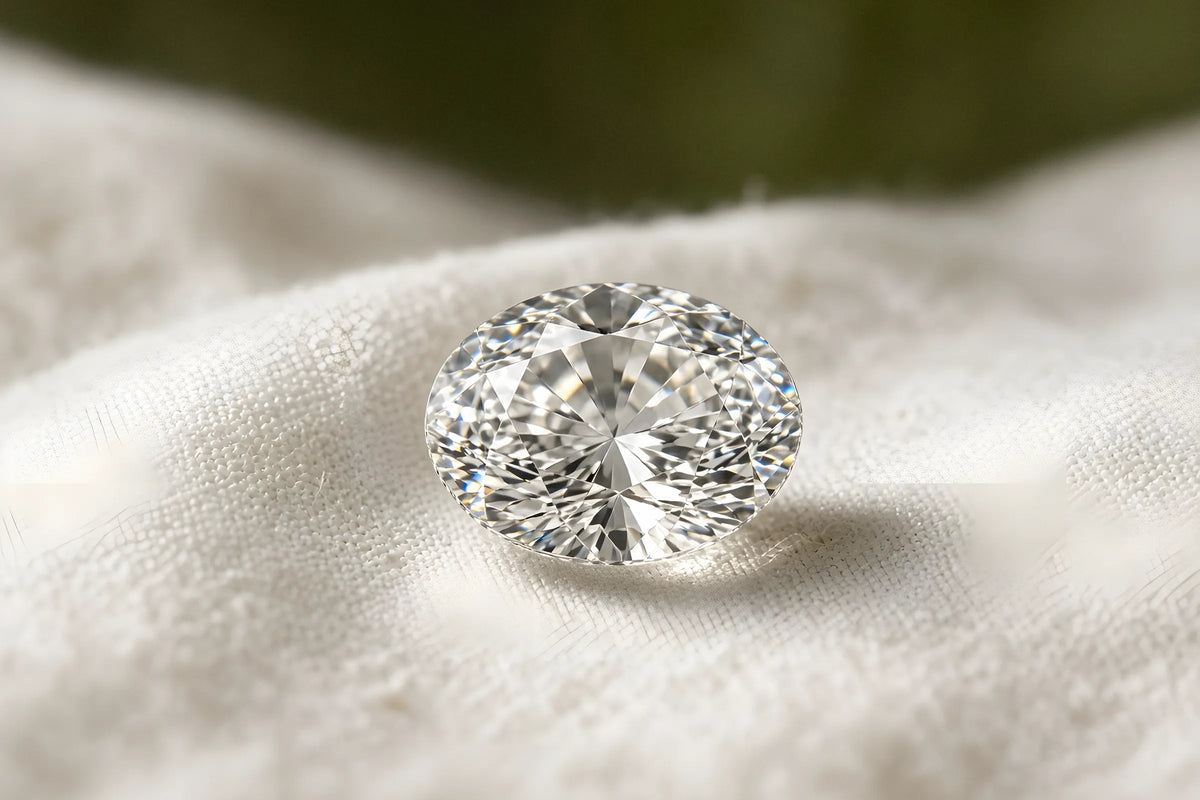
Both types are graded on cut, colour, clarity and carat. A lab-grown and a natural diamond with the same grades will look the same. Cut quality has more influence on appearance than origin does. A well-cut lab-grown stone will out-sparkle a poorly cut natural stone, and the reverse is also true.
One practical point: because lab-grown diamonds usually cost less for the same specification, many buyers find they can afford a higher cut grade. That is often the most visible upgrade you can make.
Grading
Independent laboratories grade both lab-grown and natural diamonds. The report for a lab-grown stone clearly identifies it as laboratory-grown, and it may note the growth method. Read the report the same way you would for any diamond: shape and measurements, carat, colour, clarity, cut (for rounds), polish, symmetry and fluorescence. Our guide to reading a lab-grown diamond report walks through each line.
Price
For comparable size and quality, lab-grown diamonds generally cost significantly less than natural diamonds. Lab-grown prices have also fallen over time as production has scaled. We will not quote a percentage here, because the gap varies with size, shape and grade and changes with the market. The practical effect is simple: the same budget buys more stone, better cut or a more detailed setting.
Resale and value
This is the most important difference to understand honestly. Lab-grown diamonds have low and uncertain resale value. Natural diamonds also usually resell well below their retail price, but the secondary market for them is more established.
If you see an engagement ring as something to wear for a lifetime rather than an asset, resale matters less. If future resale is important to you, factor that in. We would rather you choose with clear eyes than be disappointed later.
Durability and daily wear
There is no difference. Both are equally hard and equally suitable for an everyday engagement ring. Either can chip from a sharp knock at the wrong angle, and the setting design affects protection far more than origin does. If you are hard on your hands, consider a lower profile or a bezel. Our settings guide explains the options.
Origin and personal values
For some people, a stone formed over billions of years carries a meaning that matters. For others, a stone with a known and traceable production history matters more. Both views are valid. Lab-grown diamonds still require energy to produce, and environmental impact depends on the producer and its energy sources, so be cautious about broad "eco" claims from any seller, including jewellers.
How to choose
Ask yourself three questions:
- Is resale value important to me? If yes, lean natural. If not, lab-grown frees up budget.
- What would I rather spend on: the stone or the design? Lab-grown makes room for both.
- What feels right to the person who will wear it? This one outranks the other two.
Comparison at a glance
| Lab-grown | Natural | |
|---|---|---|
| Material | Diamond (carbon) | Diamond (carbon) |
| Hardness | 10 Mohs | 10 Mohs |
| Appearance at the same grade | Same | Same |
| Grading report | States lab-grown origin | States natural origin |
| Typical price for the same spec | Lower | Higher |
| Resale | Low, uncertain | Below retail, more established market |
Why STELLIVON works in lab-grown
We design custom engagement rings with lab-grown diamonds because it lets clients put their budget into what makes a ring theirs: proportion, setting and detail. Every stone is selected individually. Where a grading report applies, you see it before you approve the design.
The process is the same for every ring. You approve a line sketch, then a CAD built around your actual stone, before anything is made. A 75% deposit begins the work, and the balance is due after CAD approval. The deposit is refundable if you cancel before production. Because each ring is one of a kind, we do not accept returns after production, and One size change is free (you cover shipping). A change of up to 2 Hong Kong sizes is possible but requires a new band, charged separately; your centre diamond is reused. Full details are in our Custom Order Terms.
Where each type makes sense
There is no universally better choice, but there are situations where one fits more naturally.
Lab-grown may suit you if: - you want the best possible cut and size within a fixed budget; - you would rather spend part of the budget on the setting or a matching band; - you care about a stone with a clear production history; or - you see the ring as something to wear rather than to sell.
Natural may suit you if: - the idea of a stone formed over geological time is meaningful to you; - future resale or inheritance value is a priority; or - family tradition matters, for example matching a natural heirloom band.
Questions to ask any jeweller
- Is the origin stated clearly on the invoice and the report?
- Who graded the stone, and can I read the report before paying?
- Has the stone been treated?
- Can I see images or video of the actual stone?
- What are the deposit, cancellation, return and resize terms?
A jeweller who answers these questions clearly is one you can trust, whichever type of diamond you choose.
Mixing heirloom and new
Some couples want to include a natural diamond from a family piece alongside new stones. We can discuss this, but any stone you supply must be examined and measured before design, because the CAD is built around its exact dimensions. Clear disclosure still applies: we describe each stone accurately on the documentation.
A note on marketing language
Be careful with phrases such as "conflict-free", "eco" or "sustainable" from any seller, whether the stones are lab-grown or natural. Ask what can be documented. The most honest choice is the one you understand.
Frequently asked questions
Will a jeweller be able to tell? Not by eye. A laboratory can, with specialist instruments, which is why origin is always disclosed on the report.
Do lab-grown diamonds fade or go cloudy? No. A diamond's colour and clarity are stable. Cloudiness in any ring usually comes from everyday grime, which a gentle clean removes.
Are lab-grown diamonds "fake"? No. They are real diamonds. Our article are lab-grown diamonds real? explains why.
Can I mix lab-grown and natural in one ring? Technically yes, but we design with lab-grown throughout so that the stones are consistent and clearly disclosed.
Next step
Browse stones in the Diamond Library, or start with a diamond and we will guide you from there.
Does a lab-grown diamond need a report? A report is strongly recommended for a centre stone, because it independently documents the grades and the origin. Small accent stones are not usually reported individually.
Is one type more "ethical"? It depends on the specific supply chain and producer. Ask any seller what they can document about their stones, and be wary of claims that cannot be backed up.