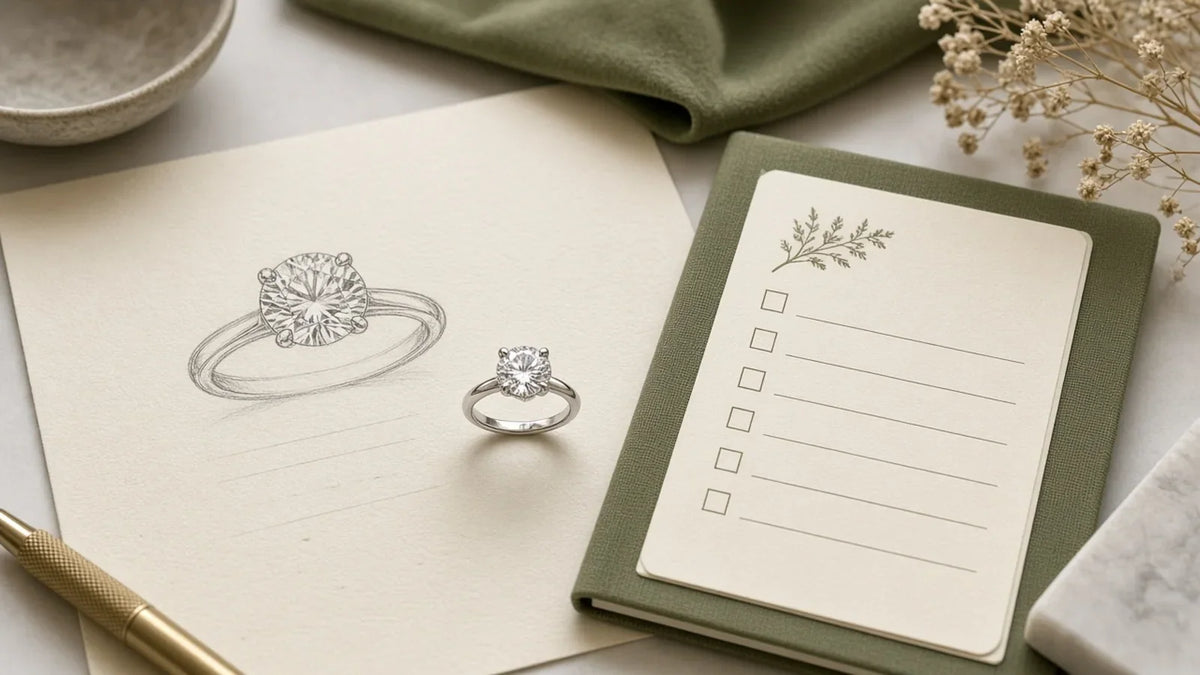
A useful custom-ring quote identifies the piece, the individual stone, the complete price and the decisions still to be settled. A loose-diamond price or starting figure cannot tell you the cost of the finished ring. Begin by checking whether two proposals describe the same ring and include the same work.
Match the stone and ring specification
Ask for the stone reference, laboratory-grown identification, carat weight, millimetre measurements and report status. IGI's diamond-report overview explains that its loose-diamond reports identify origin and document grading information. That record supports stone comparison; it does not itemise the complete ring.
- Stone: identify which images and report belong to the proposed diamond, and whether current availability has been checked.
- Setting: name the agreed direction and any details that still require review against the stone's dimensions.
- Metal: state the metal and fineness being proposed, rather than a colour description alone.
- Fit: record ring size and sizing system. Flag an unknown size before approval.
- Personal details: specify any agreed text, orientation or other feature exactly.
Separate the complete price from its components
The proposal should identify its currency, total, inclusions, exclusions and any validity period. Ask whether design development, setting work, personal details, shipping and destination charges are included, excluded or still awaiting confirmation. A breakdown is useful even when the maker quotes one combined ring price.
- Ring work
- Selected stone + agreed setting and metal + included making or design work.
- Order total
- Ring work + confirmed delivery charges + any other disclosed charges.
- Destination costs
- Ask separately about tax, duties and customs handling where relevant.
If one quote includes a report and another does not, or one includes design development while another only covers an established setting, the headline totals are not a like-for-like comparison.
Ask for the making and delivery stages separately
Ask what has to be confirmed before making can begin, what event starts the proposed making period, and whether that period uses working or calendar days. Request an estimated dispatch date separately from the delivery estimate. Design discussion, transit and customs clearance are different stages; a making estimate is not a guaranteed arrival date.
If the ring is intended for an occasion, give the date and destination early and ask which parts of the schedule can be confirmed. Read the shipping policy alongside the individual proposal.
Know which version you are approving
Keep the stone reference and design version attached to the proposal. Ask what would change if the stone, size, metal or structure changed later: price, review, timing, or more than one of these. Read the custom order terms and applicable refund policy before payment.
Illustrative comparison: proposal A covers an established solitaire direction; proposal B includes a newly developed band structure. Before choosing by total price, ask whether you need the extra development and what each proposal delivers.
Send a brief with priorities, not just a budget
State your budget currency, preferred shape, setting direction, destination and occasion date. Then name what matters most if a trade-off is needed. Prepare your design brief, using the custom ring process guide to identify the questions that still need answers, or start a design in the ring builder.
By STELLIVON. Source checked October 3, 2026. Laboratory references explain general principles; they do not certify STELLIVON or an individual ring.